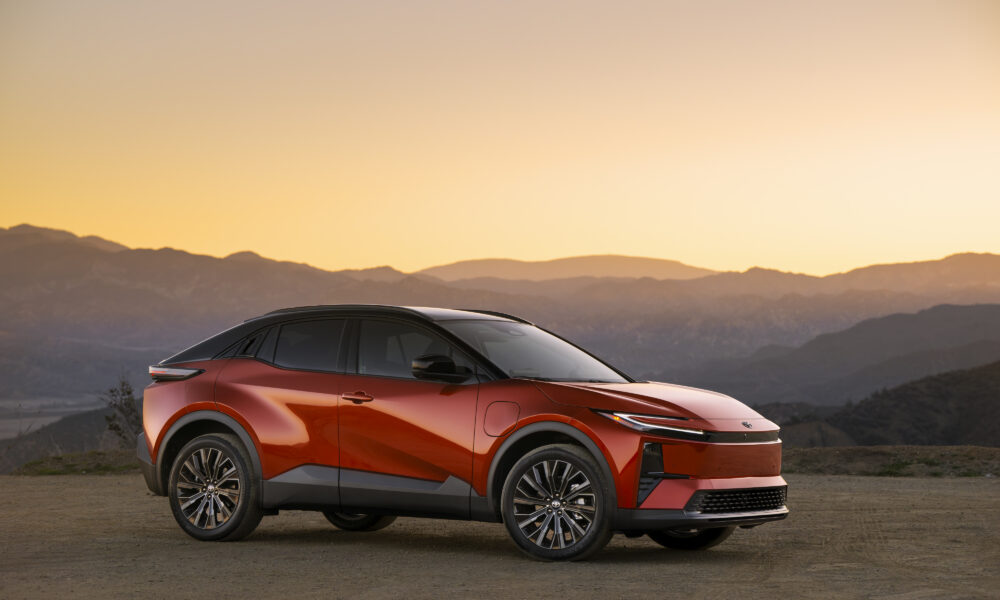
The most encouraging thing about the new Toyota C-HR is that it does not behave like a reluctant EV. Toyota spent years approaching battery-electric products with visible caution, but the revived C-HR carries more visual and technical confidence than that. It looks like a car the company actually wants to sell with conviction.
What Changed
The official U.S. story makes the case in straightforward terms: standard all-wheel drive, 338 net combined horsepower, a 0-60 mph claim under five seconds, NACS hardware, and fast-charging capability aimed at reducing the friction around ownership. Those are serious numbers for a compact crossover with mainstream ambitions.
That matters because the next phase of EV competition is no longer about proving electric propulsion works. It is about proving that electric cars can also feel emotionally intentional. The C-HR suggests Toyota understands that buyers in this part of the market still care about character and stance, not just range and interfaces.
Why It Matters
There is also broader strategic value here. Toyota does not need every EV to be conservative and reassuring in exactly the same way. The new C-HR gives the lineup a product with more edge, which makes the brand's electric future look less one-dimensional.
So the C-HR deserves attention because it makes Toyota's EV story feel more willing than before. That is a small but meaningful shift in one of the industry's most important companies.