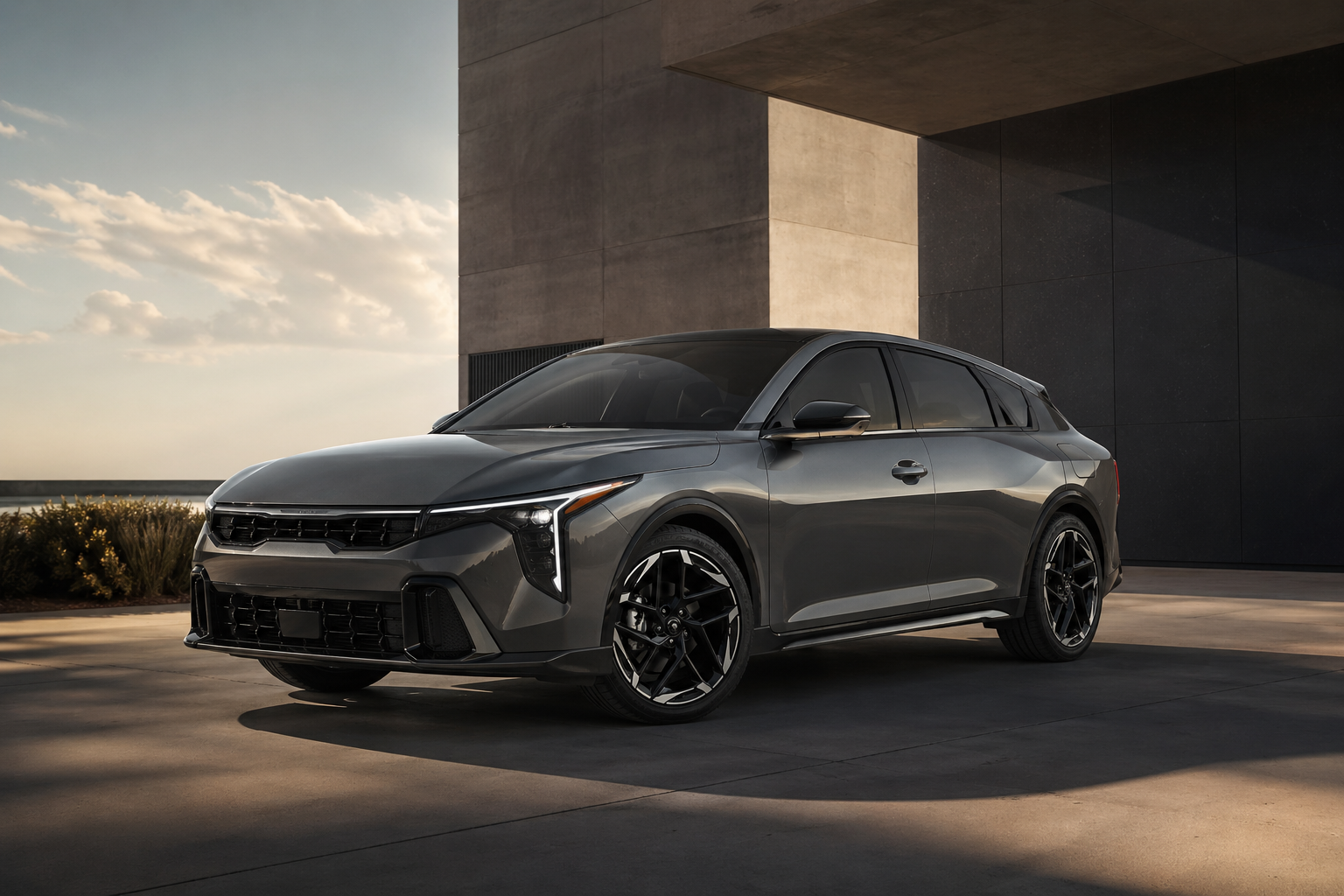

BMW M resisted the Touring idea for so long that its eventual arrival needed to feel inevitable rather than indulgent. The G61 M5 Touring does exactly that. Instead of reading like a practical spin-off, it lands as the most complete expression yet of what a modern M5 has become: brutally fast, technically dense, and surprisingly persuasive as an all-purpose flagship.
The Powertrain Case: 727 Horsepower and an Electric Motor You Actually Notice
The G61 shares its drivetrain with the sedan: a 4.4-litre twin-turbocharged V8 producing 585 hp paired with a 197 hp electric motor integrated into the eight-speed M Steptronic transmission. System output is 727 hp and 1,000 Nm of torque — numbers that were, not long ago, the domain of dedicated hypercars. The 0-100 km/h figure of 3.6 seconds understates how the car feels from inside, because the electric motor fills the brief gap between throttle input and turbo response with enough force that the car seems to react ahead of your intention.
BMW has integrated the hybrid system more convincingly here than in most competing implementations. The transitions between electric-only operation (possible up to 83 km/h for short distances), hybrid reinforcement, and pure combustion are seamless to the point that you stop thinking about them. You feel the torque management working, but you never feel the system hunting for mode decisions the way some hybrids telegraph their calculations.
The Wagon Question: What Carrying a Family Actually Changes
The G61 Touring extends the wheelbase by 121 mm relative to the sedan and gains a 500-litre boot that expands to 1,630 litres with the rear seats folded. These are numbers that make it genuinely useful for families, ski trips, or anyone transporting equipment that doesn't fit in a saloon. The rear roofline adds approximately 20 kg over the sedan, and BMW's engineers made no attempt to hide the weight on the scales — the Touring checks in at around 2,480 kg in standard configuration.
That mass is managed by an active suspension setup that borrows architecture from the current M3/M4 CS. The front subframe geometry is revised, the electronically controlled dampers have new calibration maps specific to the Touring body, and the rear axle steering — standard on the G61 — adds a physical argument for why the car turns with the confidence its footprint would seem to contradict. In Comfort mode, the car genuinely isolates you from road texture in a way that invites long distances. In Sport+, you are asked to be present.
Interior: The M5's Cockpit Gains Rear-Seat Credibility
The G61 interior uses the Curved Display setup from the standard 5 Series — a 12.3-inch instrument cluster and 14.9-inch infotainment panel running BMW's iDrive 8 operating system with M-specific overlays. The layout is clean, the physical shortcut buttons on the M-branded steering wheel reduce the reliance on touch inputs for common adjustments, and the ambient lighting adapts to the drive mode in a way that feels integrated rather than decorative.
The rear seats gain usable headroom relative to the sedan — a direct consequence of the raised roofline — and the bench is genuinely comfortable for adults on long motorway stages. The boot floor is flat with the seats up, the lashing points are positioned logically, and the powered tailgate opens wide enough that loading full-size luggage does not require the geometric creativity sometimes demanded by coupe-like wagon designs.
The Conclusion the Numbers Support
The M5 Touring G61 is not the result of customer pressure forcing BMW to build a car they were reluctant about. It is the result of a platform — the CLAR architecture with its structural rigidity, adaptive suspension mounts, and xDrive torque distribution — finally being capable of carrying the M5's performance argument in a format that requires nothing to be compromised in the loading bay. If you need to understand what the current state of high-performance family transport looks like, the G61 is the reference point everything else is measured against.