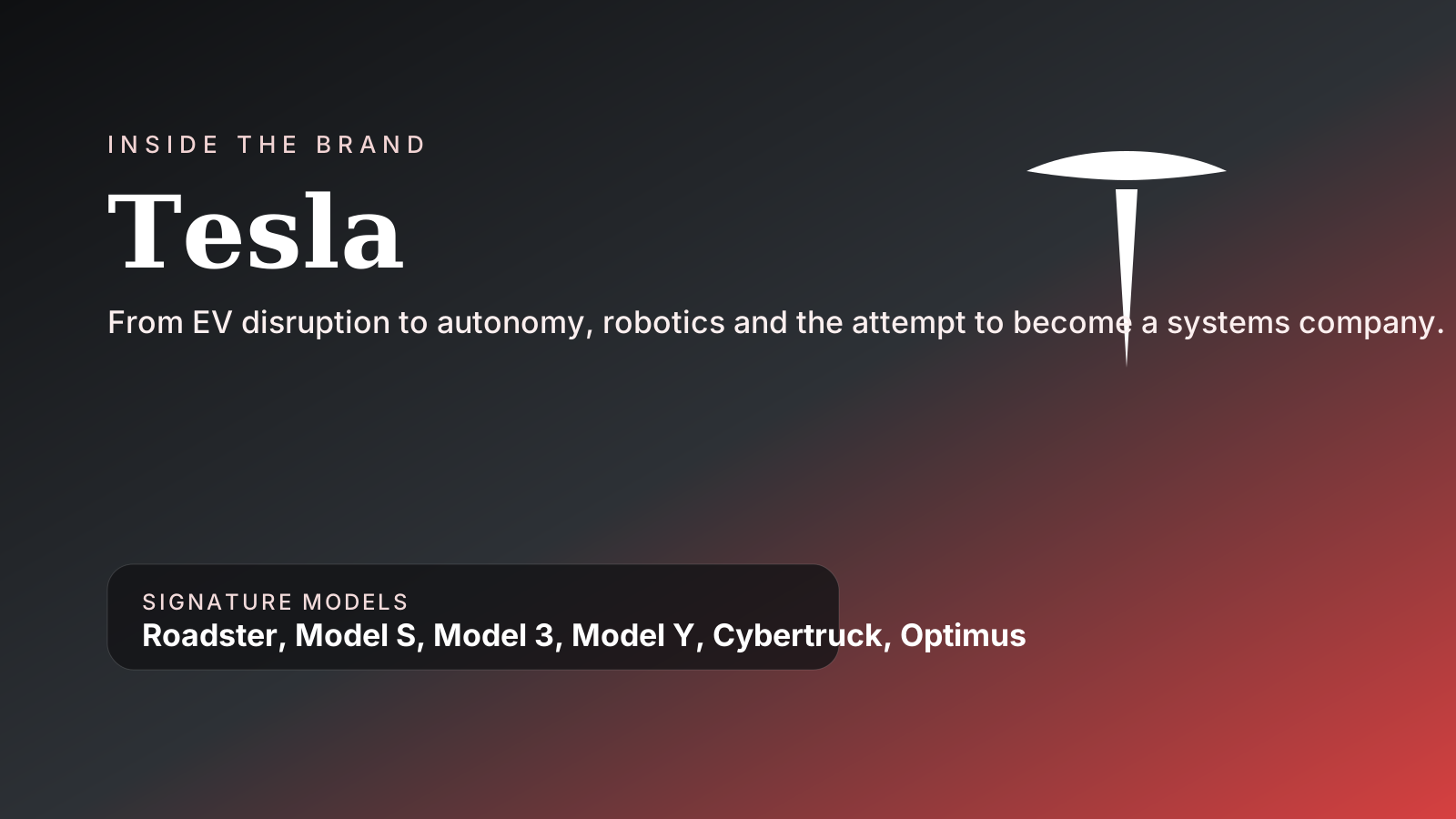
Tesla changed the car industry not just by selling electric vehicles, but by changing what a car company was expected to sound like. The brand has always framed itself as a system-level player, linking energy, software, autonomy and manufacturing scale into one bigger future story. That ambition is part of why Tesla remains so influential even when reactions to it are intensely divided.
Official Tesla messaging now places the company inside a much wider universe of AI, robotics, autonomy and scalable sustainable systems. That matters because Tesla is no longer satisfied being read simply as an EV pioneer. It wants to be understood as a platform company for the next phase of transportation and energy.
Where the brand came from
Tesla began by proving that electric cars could be desirable, fast and culturally important rather than merely compliant. Roadster cracked open the possibility space, and Model S turned that opening into a serious disruption of the premium-car market. The company built its myth around speed of execution, software-first thinking and a willingness to ignore older industry rhythms.
That starting point still matters because Tesla's whole identity is built on the idea that traditional assumptions were too timid.
Signature models
The original Roadster is the foundational symbol. Model S made Tesla globally consequential. Model 3 gave the brand scale. Model Y became its volume center. Cybertruck represents the performative side of the brand's design confidence, while the broader autonomy stack and Optimus now sit alongside the cars as major symbols of where Tesla wants to go.
Why enthusiasts care
Enthusiasts care because Tesla fundamentally shifted the conversation around EV performance, over-the-air software and vehicle architecture. Even people who dislike aspects of the brand usually admit that Tesla changed what competitors had to do.
There is also fascination in how much the company still tries to compress software culture and industrial manufacturing into one identity.
Biggest success
The biggest success is that Tesla made electric cars central to the future of the global industry far faster than most incumbents thought possible. Model S and Model 3 are the clearest product symbols, but the deeper success is strategic: Tesla forced almost everyone else to accelerate.
Biggest controversy or risky pivot
The biggest risk is the company's widening ambition itself. Tesla is trying to be an automaker, an autonomy company, an AI company, a robotics company and an energy company all at once. That can create enormous leverage, but it also makes the brand more exposed if execution slips in one of those areas.
What the brand is trying to become now
Tesla is trying to become the company that defines autonomy and AI-driven mobility at massive scale while still serving as a pillar of the broader sustainable-energy transition. It wants cars to be one part of a much bigger ecosystem.
If it succeeds, Tesla will be remembered not only for making EVs mainstream, but for trying to redraw the boundaries of what a transportation company can be.