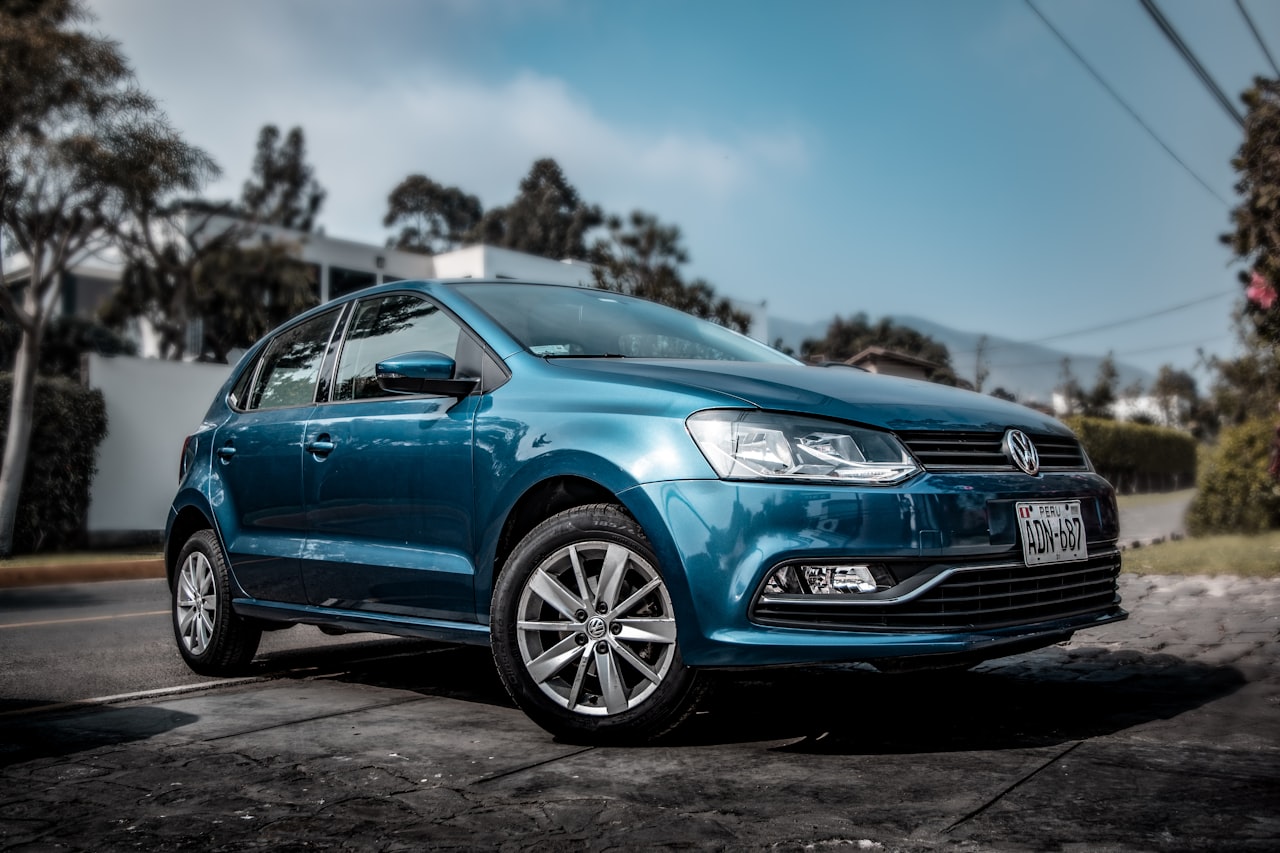
The Polo GTI exists to serve buyers who want a Golf GTI but cannot justify the footprint, the price, or the practical size of a C-segment hatchback. It is not a lesser car for that positioning — it is a different car with a different brief, and in recent generations it has become clear that the brief suits the mechanical package Volkswagen uses for it more naturally than the Golf GTI's larger dimensions would allow.
207 Horsepower From a 2.0-Litre: The Engine That Makes the Difference
Earlier Polo GTI generations used a 1.8-litre four-cylinder that, while adequate, produced a slightly breathless character at higher revs that the Golf GTI's 2.0-litre did not. The current AW generation uses the same 2.0-litre EA888 engine as the Golf GTI, detuned to 207 hp and 320 Nm. The result is a power-to-weight ratio that, given the Polo GTI's 1,327 kg kerbweight, produces genuinely quick straight-line performance: 0-100 km/h in 6.5 seconds is the quoted figure, though 6.3 is achievable with a careful launch.
The seven-speed DSG is standard; no manual gearbox is offered. This is a decision that reduces driver involvement but improves consistency — the DSG's shift speed and calibration are good enough at this power level that the manual option's absence is felt only occasionally, during low-speed urban manoeuvring where clutch feel would provide information the DSG cannot replicate.
Chassis: Where the Polo GTI Earns Its Reputation
The Polo GTI's most impressive characteristic is its steering weight and precision relative to its size. The rack is electrically assisted and quicker than the Golf GTI's — a function of the shorter wheelbase and lighter front end — producing a car that responds immediately to small inputs. This directness, combined with a front axle geometry that limits understeer without requiring the XDS differential's intervention at moderate speeds, gives the Polo GTI a playful quality that the Golf GTI, despite being the more composed car, does not deliver in the same way.
Body roll is managed well by the standard spring rates; the DCC adaptive dampers, optional on the Polo GTI, allow the ride to breathe over urban surfaces while tightening for faster road conditions. Without DCC, the standard setup is slightly firm over broken surfaces but never uncomfortable — a compromise that buyers in this segment generally accept.
Interior: Premium Intent Without Premium Pricing
The Polo GTI interior uses the same design language as the standard Polo AW, which draws from the Golf 8 in its use of a digital instrument cluster and central infotainment screen. The GTI-specific additions — a sport steering wheel, the tartan seat fabric option, red stitching detailing — add character without creating a cabin that feels artificially differentiated from a standard Polo. The quality of plastics and switchgear is consistent with what the price bracket warrants: better than the Fiesta ST managed before its discontinuation, competitive with the Renault Clio RS.
The Small Hot Hatch as an Adult Purchase
The Polo GTI is not a car for buyers who want to communicate performance aspirations. It is a car for buyers who have decided that the Golf GTI is larger than their life requires, and who want a compact, efficient, daily-usable car that rewards occasional commitment without demanding it. In a segment that has lost the Ford Fiesta ST and is increasingly populated by cars that are either too compromised for daily use or too expensive for their displacement class, the Polo GTI occupies a position of competitive isolation — which, for buyers who know what they are looking for, amounts to a clear recommendation.