The most persuasive part of the latest Toyota bZ story is not the facelift language. It is the fact that Toyota is framing the car around charging intelligence and battery behavior instead of treating those elements like footnotes behind range numbers. That is exactly where a modern EV has to improve if it wants to feel properly resolved.
What Changed
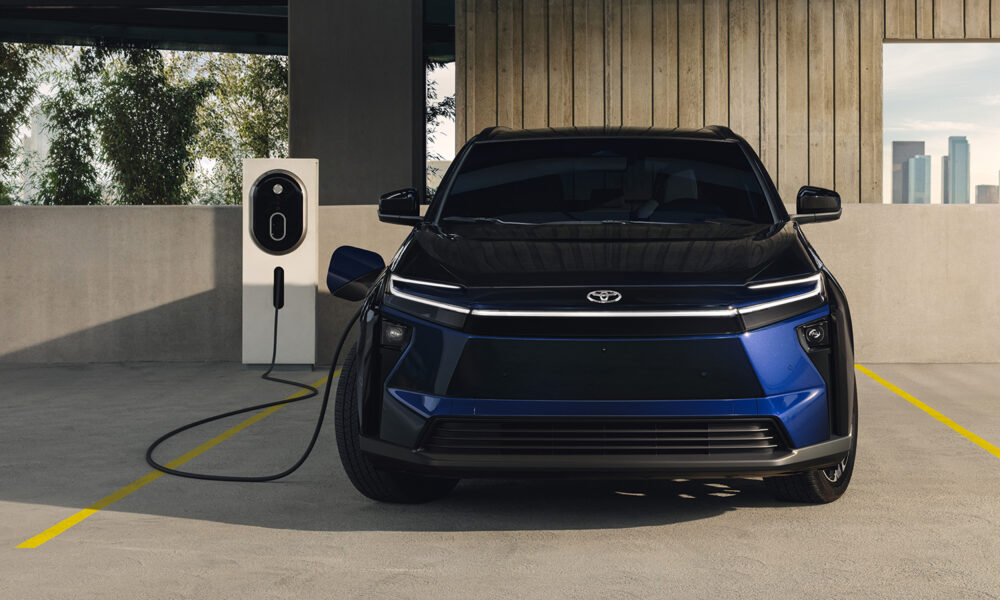
In its 2026 update, Toyota points to a larger battery on key grades, NACS hardware, Plug & Charge capability, battery preconditioning, improved on-board AC charging, and regenerative braking paddles that give the driver more direct influence over energy recovery. These are not abstract upgrades. They are the kinds of changes that alter how an EV behaves on a busy week, not just on a spec sheet.
Battery preconditioning is especially important because it shows Toyota is taking cold-weather charging performance seriously. Fast charging only matters if the pack can arrive at the station in a state that actually supports the promised session. Thermal management has therefore become one of the most honest measures of EV engineering maturity.
Why It Matters
There is also a systems lesson here. Charger access, authentication, route planning, and battery conditioning are no longer separate conveniences. They are one integrated ownership experience. Toyota seems to understand that the customer judges all of it together, not in isolated engineering boxes.
That is why the updated bZ reads as more than a normal model-year revision. It is Toyota acknowledging that a competitive EV is now defined as much by charging choreography and battery preparation as by the vehicle itself.