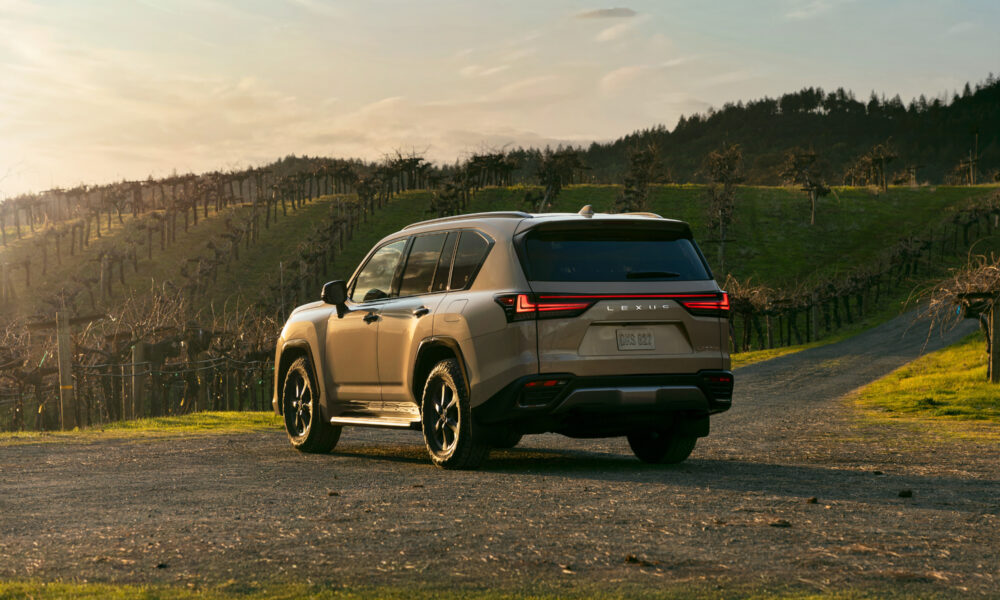
Adding a hybrid system to the LX could have gone badly if Lexus had treated electrification as a compromise. The 700h suggests the brand understood the risk. It has not tried to make the flagship SUV feel apologetic or artificially restrained. Instead, it has used hybridization to reinforce capability.
What Changed
Officially, that means a twin-turbo 3.4-liter V6 hybrid setup with 457 horsepower and 583 lb-ft of torque, plus up to 8,000 pounds of towing and an Overtrail grade available exclusively on the LX 700h. Those numbers matter because they frame the vehicle as more than a luxury add-on. It is still very much a working full-size SUV in structure and intent.
That is where the 700h becomes strategically important. Lexus has spent years adding electrified options across the lineup, but doing it in a flagship body-on-frame vehicle carries a different kind of weight. The move shows the company believes hybridization can strengthen capability narratives, not just efficiency headlines.
Why It Matters
The new Overtrail angle also helps. It pushes the LX deeper into the space where luxury buyers increasingly want authenticity rather than just polish. The message is clear: the 700h is not here to civilize the LX beyond recognition. It is here to broaden what the flagship can do.
That makes the LX 700h one of Lexus' more meaningful recent introductions. It proves the brand's hybrid strategy can scale upward without losing nerve.