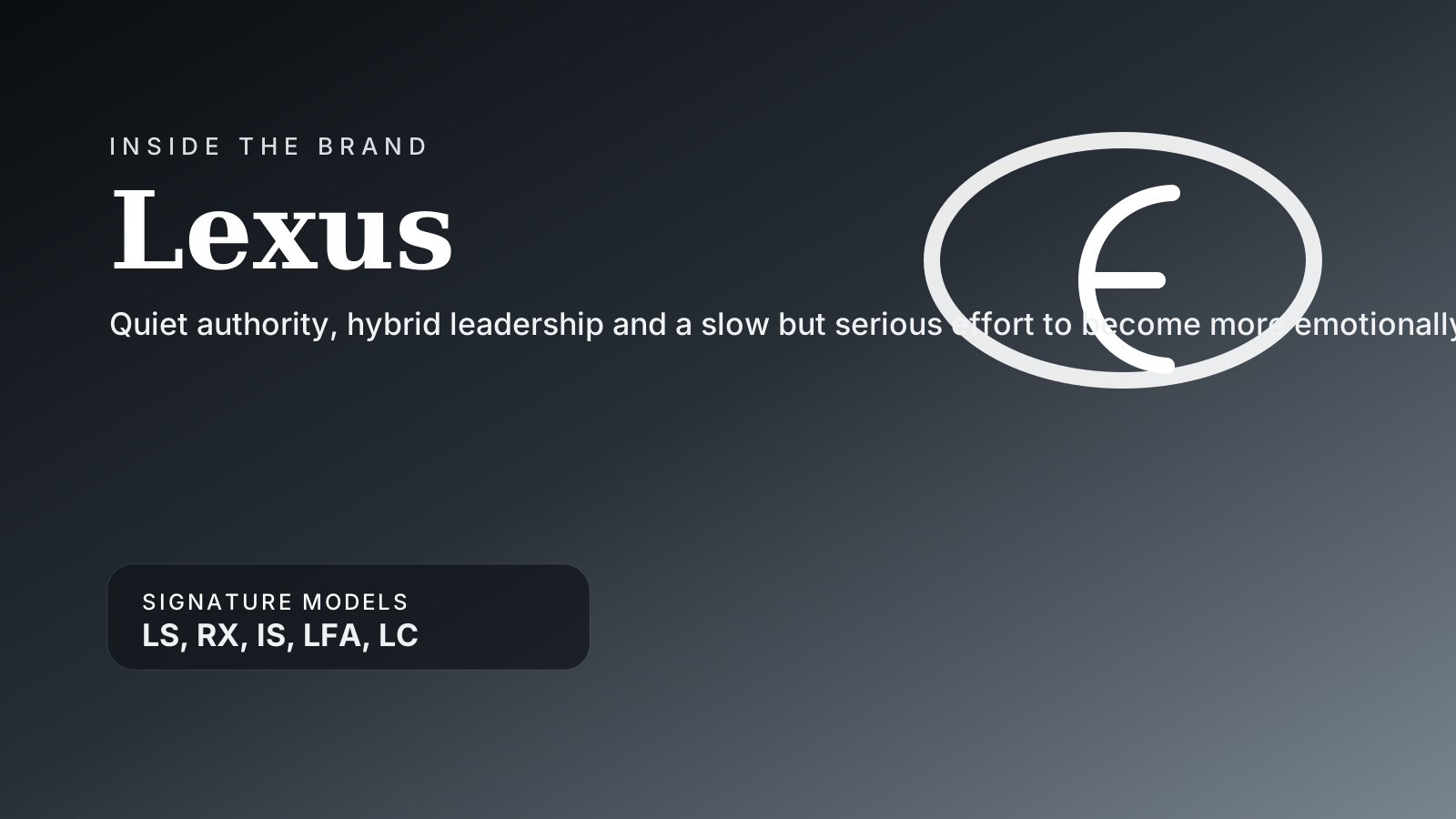
Lexus has spent much of its life fighting a shallow reading of itself. To critics, it was sometimes only the very polished alternative. To customers, it was often something more valuable: a luxury brand built around calm excellence, hospitality, reliability and the belief that refinement can be a form of confidence. That deeper reading is the one that matters now, especially as Lexus tries to evolve into a more emotionally charged and more explicitly electrified brand.
The official Lexus story still returns to 1989, when the first LS and ES established the marque. That is the right place to begin because those cars did more than launch a new luxury division. They created the code: quietness, comfort, meticulous finish and a customer experience shaped around omotenashi rather than around inherited European prestige.
Where the brand came from
Lexus emerged as a challenge to the idea that luxury had to look and behave in one traditional way. Instead of leaning on aristocratic history, Lexus built its case through engineering polish, silence, consistency and customer treatment. That made it enormously successful, but it also created an image that sometimes underplayed the brand's technical daring and dynamic intent.
Over time, Lexus has tried to correct that imbalance. Design became bolder. Driving language became more prominent. Electrification became central long before many luxury rivals were ready to treat it seriously. The result is a brand whose public image is still catching up with its product ambition.
Signature models
The first-generation LS is the essential origin model because it established the brand's values in one stroke. The RX then became arguably the most commercially important Lexus, helping define luxury crossover success. The IS brought a more driver-focused flavor. The LFA remains the emotional outlier that proved Lexus could build a true halo car with almost mythical status. The LC translated some of that emotional power into a road-going grand tourer. Now the RZ and the next-generation ES are helping point the brand toward its future.
Why enthusiasts care
Enthusiasts care because Lexus has always had more engineering depth than its smooth surface first suggests. The LFA is the obvious reason, but it is not the only one. The best Lexus products tend to be deeply resolved rather than loudly performative. Even when they are not the sharpest cars in the segment, they often feel uniquely complete.
There is also growing interest because Lexus is in transition. The brand's recent electrification language is more ambitious than before, and that creates tension in a good way. People want to see whether a company associated with quiet confidence can also build the next compelling expression of electric premium performance.
Biggest success
The biggest success is that Lexus created a luxury identity that customers trust deeply and globally without relying on old European hierarchies. That is harder than it looks. Plenty of brands can build a good luxury car. Much fewer can create an entire ownership atmosphere that people associate with low stress, high quality and repeat confidence.
The RX may be the clearest product symbol of that success, while the broader hybrid strategy is the strategic one. Since the RX 400h in 2005, Lexus has been able to claim genuine pioneering status in luxury electrification. That long runway matters now more than ever.
Biggest controversy or risky pivot
The biggest risk is the current brand transformation itself. Lexus wants to become more emotionally legible, more design-led and more forcefully electrified without sacrificing the quietness and trust that built the marque. That is a delicate balancing act. If the company leans too far into generic futurism, it loses the human warmth that made Lexus special. If it moves too cautiously, it risks being respected but not desired.
Official recent product messaging shows Lexus trying to solve that problem directly. The 2025 ES reveal, for example, links next-generation electrification to quietness, ride comfort, new design language and a broader reimagining of the brand. That suggests Lexus understands the future cannot be communicated only through batteries and platforms. It has to feel like a more compelling Lexus.
Luxury, electrification and identity
Lexus is in a stronger position than many people realize because it does not need to discover refinement in the electric era. It already owns that territory. Electric drivetrains can actually amplify many of the qualities Lexus has valued for decades: calmness, smooth response, precision and low fatigue over distance.
The challenge is adding emotional pull. Concepts, performance subtexts and cars like the LC and LFA have already shown that Lexus can do this. The question now is whether the next full generation of products can make emotionality feel central rather than occasional.
What the brand is trying to become now
Lexus is trying to become the most convincing human-centered electric luxury brand. That means preserving omotenashi, quality and serenity while adding stronger design confidence, richer dynamic identity and a more future-facing digital experience. It also means using electrification to enhance what Lexus already does well instead of using it as a reason to imitate someone else.
If that transformation lands, Lexus could become one of the most quietly powerful premium brands of the next era. And “quietly” is the important word here. Lexus has never needed to behave like a louder rival to matter. Its best future is one where it becomes more emotionally vivid while staying unmistakably itself.