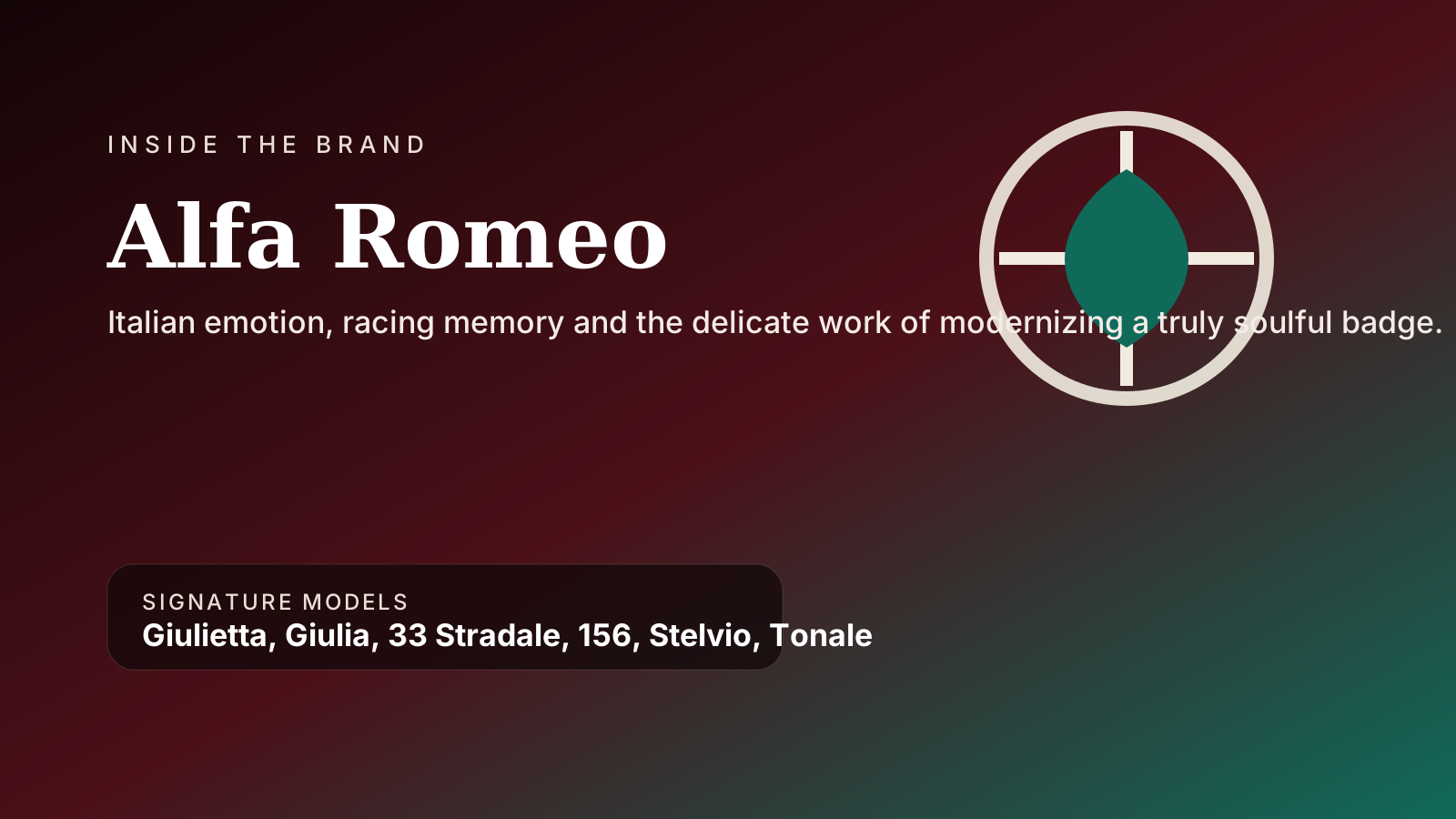
Alfa Romeo remains one of the industry's great emotional brands because it has never relied on logic alone. People love Alfa Romeo for reasons that include design, racing memory, steering feel, Italian elegance and the sense that driving should stir something beyond efficiency. That emotional surplus is the whole point of the badge.
The modern challenge is that feeling alone is never enough. Alfa Romeo now has to convert heritage and desire into a more disciplined, more contemporary premium strategy. Official messaging around recent models and the wider metamorphosis of the brand makes clear that Alfa does not want to become generic. It wants renewal without surrender.
Where the brand came from
Alfa Romeo's roots stretch back to 1910, and the marque quickly became one of Italy's central performance and design references. Racing, engineering experimentation and visual elegance all entered the brand early, which is why Alfa mythology has always felt deeper than a normal product story.
The badge earned its aura through both competition and road cars that seemed to move with more character than their rivals. That connection between sporting soul and beauty still defines the strongest Alfas.
Signature models
The 8C and racing cars built the early legend. Giulietta and Giulia became essential road-car symbols. The original 33 Stradale remains one of the most revered shapes in automotive history. More recently, 156 and 147 kept the emotional compact-sedan spirit alive, while the modern Giulia and Stelvio reasserted rear-drive sporting intent. The reborn 33 Stradale and newer crossover era mark the current transition.
Why enthusiasts care
Enthusiasts care because Alfa Romeo still stands for a rarer idea of desirability. A great Alfa does not feel designed by committee. It feels drawn with conviction and tuned by people who wanted the driver to feel a pulse through the controls.
There is also tremendous affection for the brand's history. Alfa Romeo is one of those marques whose best cars continue to shape enthusiasm far beyond their production numbers. The emotional afterglow is part of the value.
Biggest success
The biggest success is that Alfa Romeo created one of the most romantic identities in the history of the automobile and kept that identity alive through decades of changing ownership, changing technologies and changing market expectations.
If one product best symbolizes that emotional achievement, it may be the original 33 Stradale. But the larger success is that Alfa Romeo still means something vivid to enthusiasts all over the world.
Biggest controversy or risky pivot
The biggest risk has always been how to industrialize romance without draining it. Alfa Romeo needs enough product discipline, scale and reliability to survive, but too much rationalization can make the badge feel ordinary very quickly.
The current pivot into a leaner portfolio, electrified futures and a wider premium audience is therefore delicate. Alfa Romeo has to modernize, but it cannot sound generic while doing it. Soul is not a side feature here. It is the asset.
Racing memory, design purity and the modern reboot
Racing still matters because Alfa Romeo's authority was built in competition long before many current rivals existed in their present forms. That history gives the brand depth, but depth only helps if the modern cars still feel alive enough to honor it.
Cars like the current Giulia, the limited 33 Stradale and the Tonale-era repositioning show the company trying to reconnect purity, beauty and market relevance. That is the right problem for Alfa Romeo to solve.
What the brand is trying to become now
Alfa Romeo is trying to become a more disciplined premium performance brand that still leads with Italian emotion, design purity and driver appeal. It wants to modernize the business without sterilizing the badge.
If it succeeds, Alfa Romeo will remain one of the few marques that can still make buyers feel they chose a car for love and not just for correctness. That difference is why Alfa still matters.