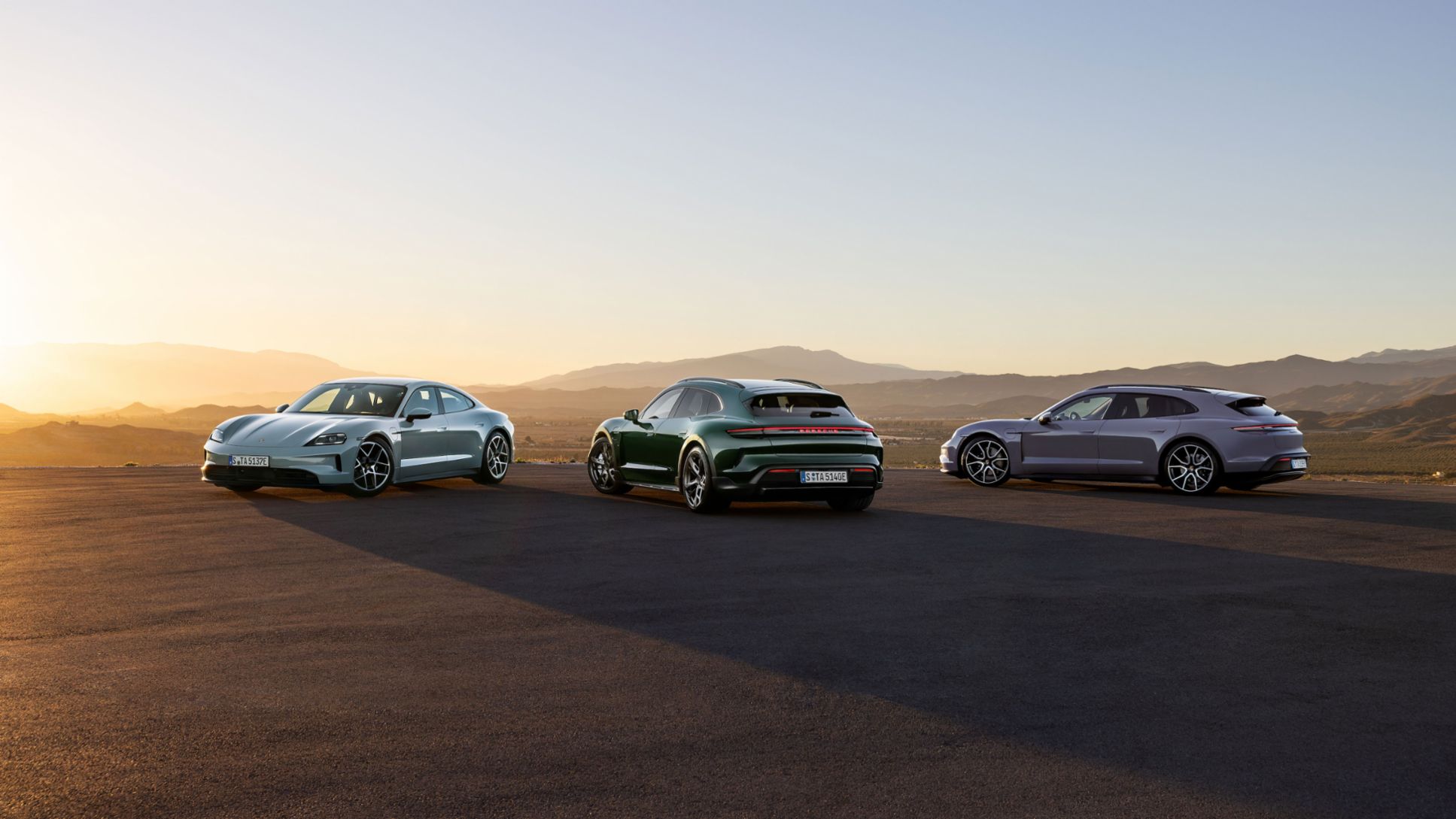
Porsche released the Taycan in 2019 with a specific set of claims: that it would drive like a Porsche, that it would charge faster than the competition, and that its dual-motor all-wheel-drive system would deliver performance without the artificial drama that characterized some early electric vehicles. All of those claims were true. The 2024 update, the most significant revision since launch, addresses the areas where the original fell short: range, software, and the refinement of an already accomplished chassis.
What the Update Actually Delivers
The 105-kWh battery (93.4 kWh usable) replaces the original 93.4-kWh pack. EPA range for the Turbo S stands at 295 miles — a 96-mile improvement over the car's 2019 specification. The 800-volt architecture supports 320-kW charging. Under real-world conditions, a charge session from 10 to 80 percent takes under 20 minutes. Porsche has also revised the regenerative braking calibration to feel more natural in light traffic, which is a meaningful quality-of-life improvement over extended daily use.
The Turbo S powertrain produces 938 horsepower in overboost — activated through launch control — and 1,048 lb-ft of torque. The 0-60 time is 2.4 seconds. These numbers have been equaled or exceeded by several competitors since 2019. What has not been equaled is the way the Taycan deploys its performance. The chassis tuning, the steering calibration, and the brake pedal feel are all more linear and more predictable than any direct competitor. The car feels like it was engineered, not assembled.
The Chassis Is the Story
Porsche's engineers spent the development of the Taycan ensuring that the electric powertrain did not compromise the handling qualities that define the brand's road cars. The rear-axle steering, the air suspension, and the torque vectoring system all work together with a coherence that rewards drivers who explore the limits rather than simply exploiting the straight-line acceleration. On a closed circuit, the Taycan Turbo S is genuinely quick — not just quick for an electric car, but quick against any comparable sports sedan regardless of powertrain technology.
The Cabin in 2025
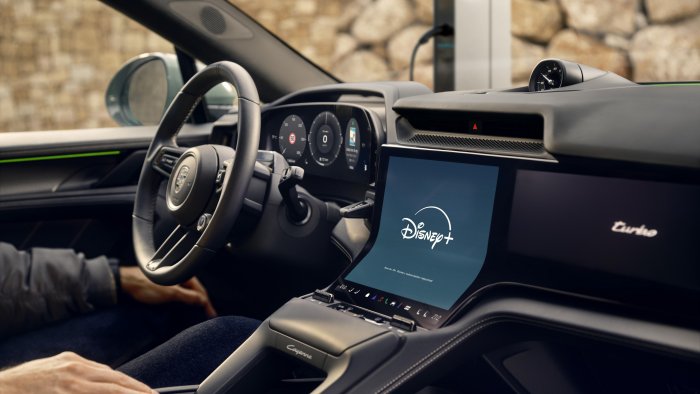
The interior received a revised infotainment system with improved software responsiveness and a reorganized menu structure. The curved digital display across the dashboard remains one of the most elegant instrument panel designs in current production. The optional rear seat entertainment screens integrate cleanly with the overall architecture. Build quality is consistently high across all trim levels.
The Taycan Turbo S costs $193,800 in base specification. At that price, it competes with the best of what Europe's performance manufacturers can offer. The argument for buying it over a gasoline alternative rests not on ideology but on engineering quality. That argument, five years after launch, remains entirely valid.