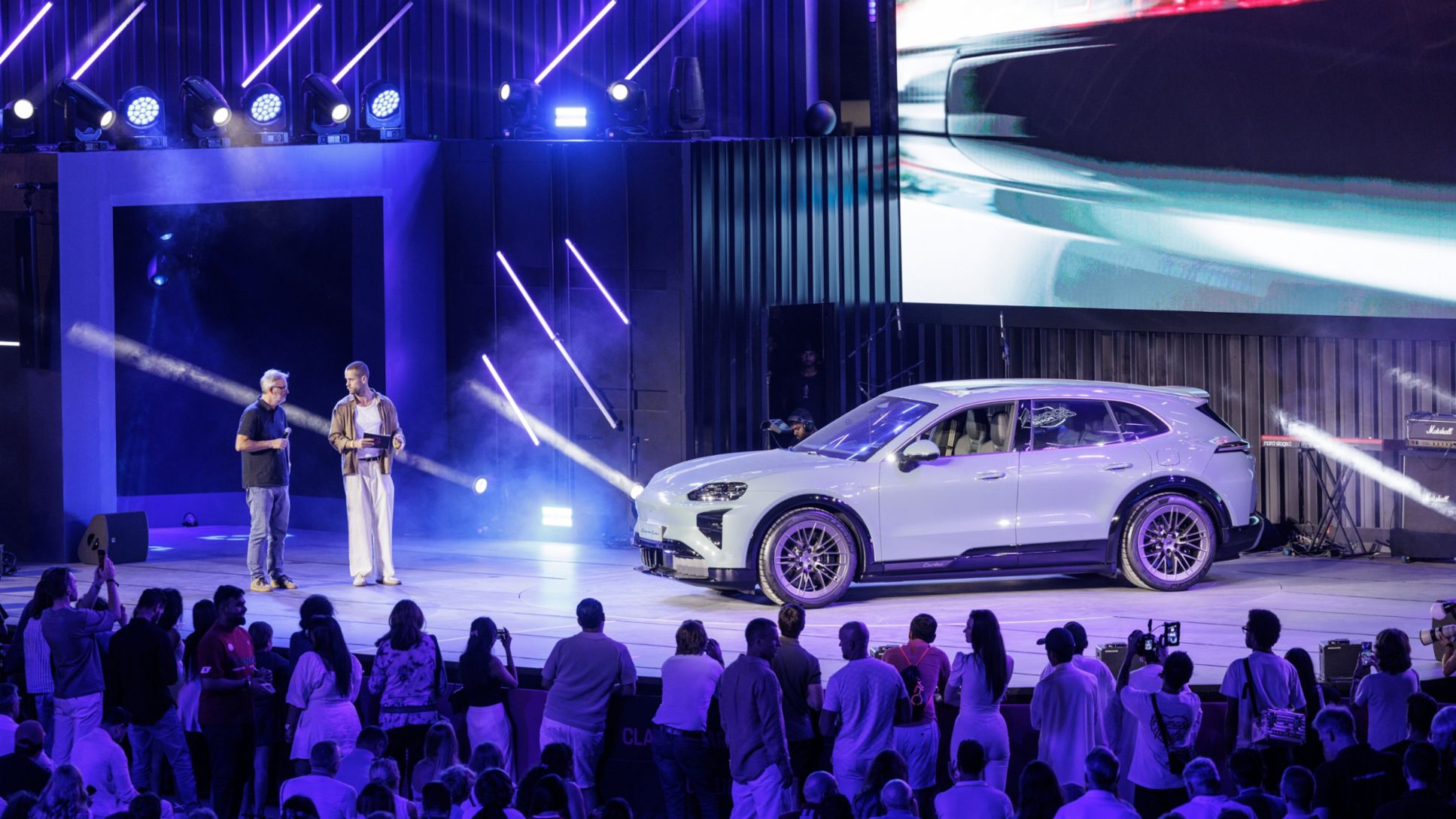
Porsche can afford experimentation in the margins. It cannot afford uncertainty in the Cayenne. That is what makes the electric version so significant. This is not a halo car built to demonstrate technical ambition and then retreat into low volumes. It is one of Porsche's core products, and its transition to electric power tests whether the company can translate EV credibility into the center of its business rather than the edges.
What stands out most is that Porsche has deliberately avoided presenting the Cayenne Electric as a one-for-one replacement for every existing version. Instead, the company says the electric SUV will be sold alongside combustion-engined and plug-in hybrid Cayennes into the next decade. That is a smart move. The Cayenne customer base is broad: some buyers want towing ability, some want silence and effortless torque, some still want familiar long-distance refueling habits. By offering parallel powertrains, Porsche is giving the electric Cayenne room to win customers on merit instead of forcing the transition through lack of choice.
The technical package is strong enough to justify that confidence. Porsche says the new model uses a 113 kWh high-voltage battery and 800-volt architecture, with DC charging of up to 390 kW and, under certain conditions, peaks of 400 kW. The official claim is that a 10 to 80 per cent charge can take less than 16 minutes, while roughly 325 kilometres of WLTP range can be added in 10 minutes. Those numbers place the Cayenne Electric exactly where it needs to be: not merely competitive on paper, but credible as a large luxury SUV that can cover distance without turning every road trip into a logistics exercise.
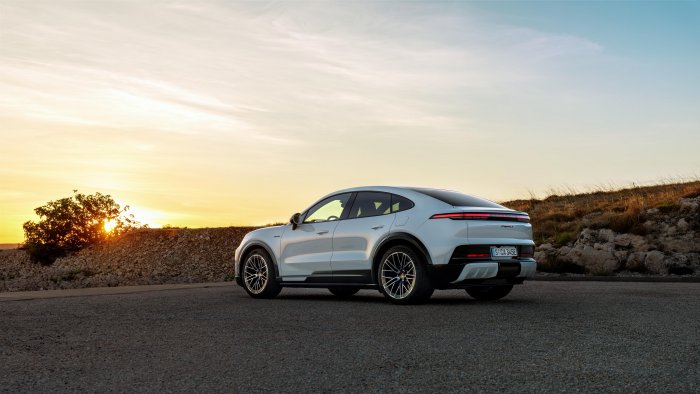
Performance, meanwhile, is pure modern Porsche excess. The standard Cayenne Electric delivers up to 325 kW and 835 Nm with Launch Control, enough for 0-100 km/h in 4.8 seconds. The Cayenne Turbo Electric goes much further, reaching up to 850 kW, 1,500 Nm and a 0-100 km/h time of 2.5 seconds. Those are not ordinary SUV figures; they are supercar figures wearing a family-car silhouette. Yet the more persuasive part of the story is not the headline sprint time, but the breadth of the engineering brief around it. Adaptive air suspension is standard, rear-axle steering is available, Porsche Active Ride appears on the flagship version, and towing capacity reaches up to 3.5 tonnes depending on specification.
That breadth is what will decide whether the electric Cayenne becomes a landmark model or merely an impressive spec sheet. Porsche quotes luggage space of 781 to 1,588 litres, adds a 90-litre front trunk, and claims genuine long-distance comfort and real off-road confidence. The company is also leaning heavily into personalization, which is clever because the Cayenne has always been as much a lifestyle purchase as a rational one. A fast EV can be copied; a desirable luxury product with real identity is much harder to replicate. Porsche seems to understand that the Cayenne Electric has to feel special before it feels sensible.
Seen from that angle, the new Cayenne is arguably the most revealing Porsche EV yet. The Taycan proved the brand could build an electric performance car with emotional credibility. The Macan Electric widened the formula. But the Cayenne Electric has to satisfy families, company-car drivers, repeat Porsche buyers and luxury-SUV shoppers all at once. That is a far tougher assignment. Right now, the signs are encouraging: production is live, official specifications are ambitious without sounding absurd, and Porsche is treating the model as a centerpiece of the business. If the charging consistency and chassis tuning are as polished in the real world as they look on paper, the electric Cayenne could become the model that normalizes the idea of a high-end EV SUV for buyers who never thought they were waiting for one.