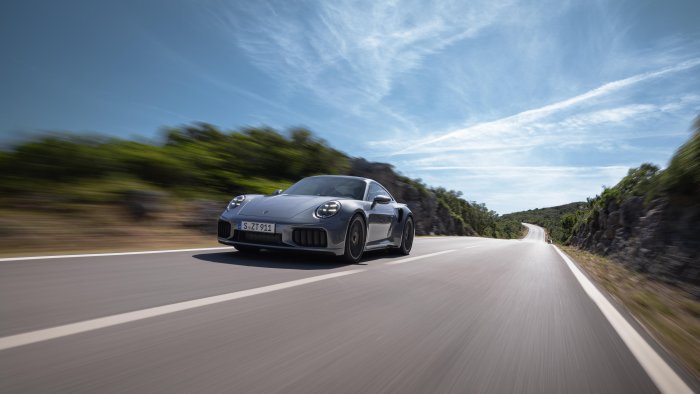
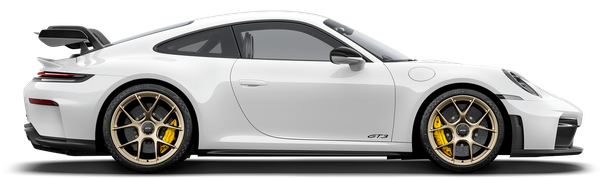
There is a point at which a car stops being transportation and becomes an argument. The Porsche 911 GT3 crossed that line some time ago. In 2025, with turbocharged engines dominating even the sports car segment, with electrification pressing in from every direction, the GT3 continues to offer a 510-horsepower naturally aspirated flat-six, a seven-speed PDK or a six-speed manual transmission, and rear-wheel drive. Its position in the market is not commercial. It is philosophical.
The Engine Is the Point
The 4.0-liter flat-six in the GT3 is derived from the 911 RSR race car. It revs to 9,000 rpm. At full chat, the sound it produces — a hard, mechanical shriek that climbs through the gears without the artificial drama turbocharged engines create — is the reason people choose this car over faster, cheaper alternatives. Power delivery is entirely linear. You always know exactly where you are in the powerband, and the engine responds to throttle inputs with a directness that turbocharged units, however refined, cannot fully replicate.
This matters because the GT3 is a car designed for driver involvement above all else. Every system exists to communicate. The steering weight and feel, the throttle response, the way the rear of the car loads up under braking — these are not incidental sensations. They are the product of deliberate engineering choices made in the knowledge that the driver wants to know what the car is doing at all times.
PDK or Manual: A Real Choice
Porsche offers the GT3 with either a seven-speed PDK dual-clutch transmission or a six-speed manual. The PDK is faster. Its shifts are measured in milliseconds, and in track use it allows the driver to focus entirely on line and braking. The manual is not slower in any meaningful sense on public roads, and it adds a layer of interaction that many GT3 buyers specifically seek. The clutch pedal weight and travel are judged correctly. The gear throws are short and precise. This is one of the few remaining cars in which choosing a manual transmission is not a compromise — it is a preference.
Track Use and the Numbers
The GT3 laps the Nürburgring Nordschleife in under seven minutes in standard specification. It produces 409 pounds of downforce at 124 mph without optional aerodynamic upgrades. The carbon-ceramic brakes — standard on the GT3 RS, optional here — do not fade. The tires are Michelin Pilot Sport Cup 2R, developed specifically for this car.
On the road, the GT3 is firm. It translates surface imperfections with honesty, and the ride quality is not the car's priority. What it offers instead is a level of driver engagement that most cars in any price bracket — and this one starts near $200,000 — cannot approach. Whether that trade is worth making depends entirely on what you want a car to be. The GT3's answer to that question is the clearest in the current Porsche lineup.