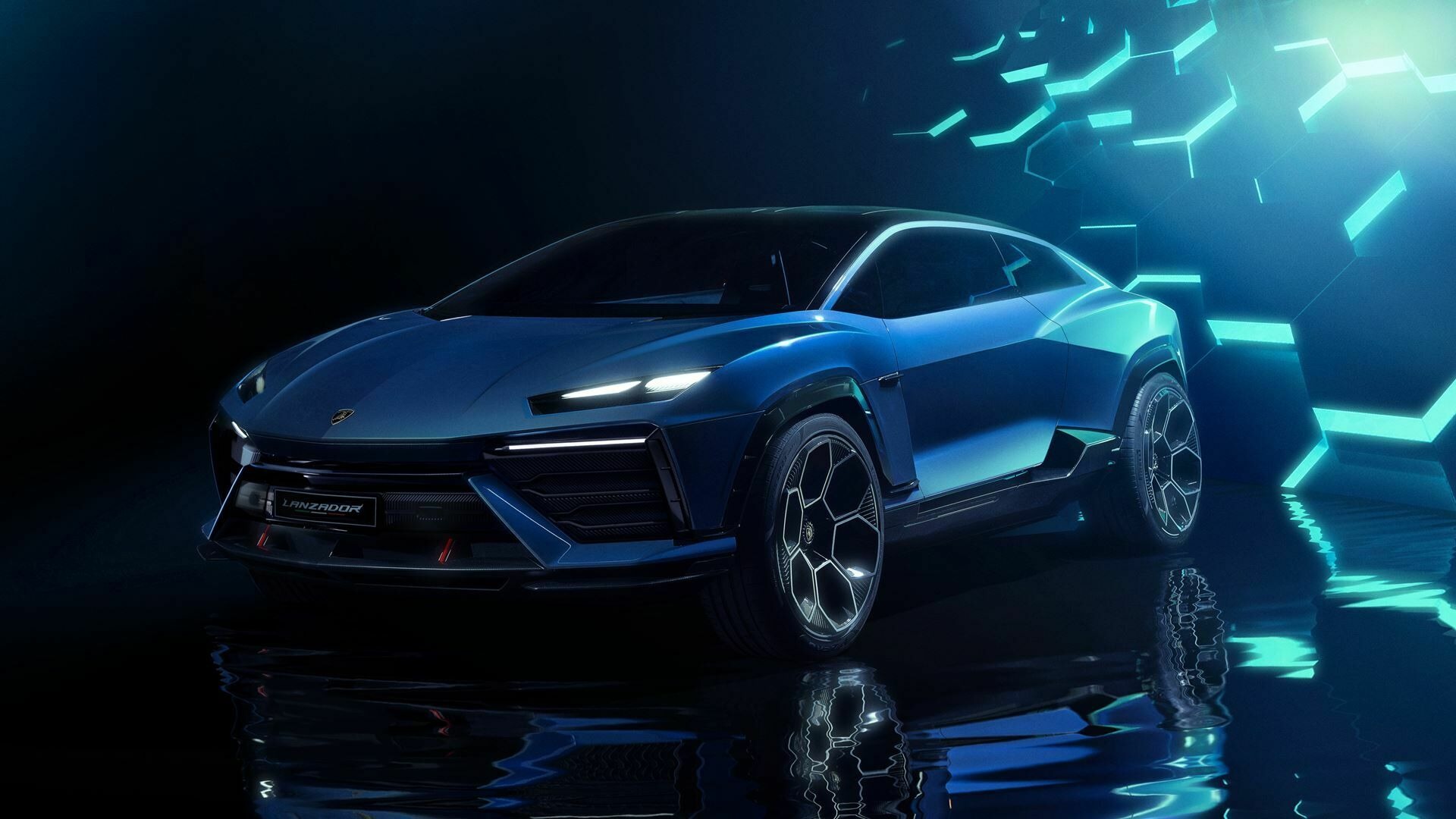

Replacing the Huracan was never going to be a routine product job for Lamborghini. The V10 car had become one of the last great naturally aspirated supercars, and its success gave the successor an unusually difficult brief: move the platform forward without breaking the emotional contract. The Temerario answers with a twin-turbo 4.0-liter V8, three electric motors, and a philosophy that treats hybridization not as compromise, but as a way of preserving intensity under new rules.
907 Horsepower, Explained
The Temerario's system produces 907 combined horsepower — 789 from the combustion engine alone, the remaining 118 from the electric motors. Two motors drive the front axle, one assists the rear, and together they enable torque vectoring across all four wheels with a precision no mechanical differential can match. The powertrain is fully charged at all times through regenerative braking and the combustion engine. There is no plug-in option, which Lamborghini considers a philosophical choice: the Temerario is a driver's car first, an EV second.
The twin-turbo V8 revs to 10,000 rpm — a number that required Lamborghini's engineers to develop a flat-plane crankshaft configuration unusual for a production V8. The sound is different from the V10, sharper and more mechanical at the top of the rev range, without the Huracán's distinctive low-frequency register. Different, not inferior, though the debate will continue among enthusiasts for years.
The Chassis
The Temerario sits on a new carbon fiber monocoque developed in-house at Sant'Agata. It is lighter than the Huracán's aluminum-carbon construction and stiffer in torsion. The suspension is fully active, with each corner managed independently at rates faster than a human driver can perceive. The result is a car that can simultaneously manage ride quality on public roads and maintain flat, controlled body motions on track — a combination that was not available in the previous generation.
What Changes, What Stays
The Temerario is wider, lower, and longer than the Huracán. The visual language has shifted: fewer sharp angles, more considered surfaces, an aerodynamic philosophy that prioritizes downforce over drama. Inside, the cabin is cleaner than any previous Lamborghini, with a digital instrument cluster and an infotainment interface that does not embarrass the car in modern company.
Whether the Temerario is the right successor to the Huracán is a question the market will answer over the next several years. What is clear from the specification sheet and from Lamborghini's stated intentions is that it was designed to be a better car, not just a different one. Those are not always the same thing. In this case, the evidence suggests they may be.