The BMW X3 has been the brand's volume leader in many markets for the better part of a decade. The third-generation G01 variant, introduced in 2017 and revised midway through its cycle, sold in numbers that allowed BMW to fund the structural investments now embedded in the G45. This is not, then, a car BMW needed to rebuild for survival. It is a car BMW rebuilt because the competitive set — the Audi Q5, Mercedes-Benz GLC, Volvo XC60, and the growing Porsche Macan EV — has become thorough enough that incremental updates no longer constitute a credible defence of market leadership.
Design: A Larger Car That Carries Its Size Better
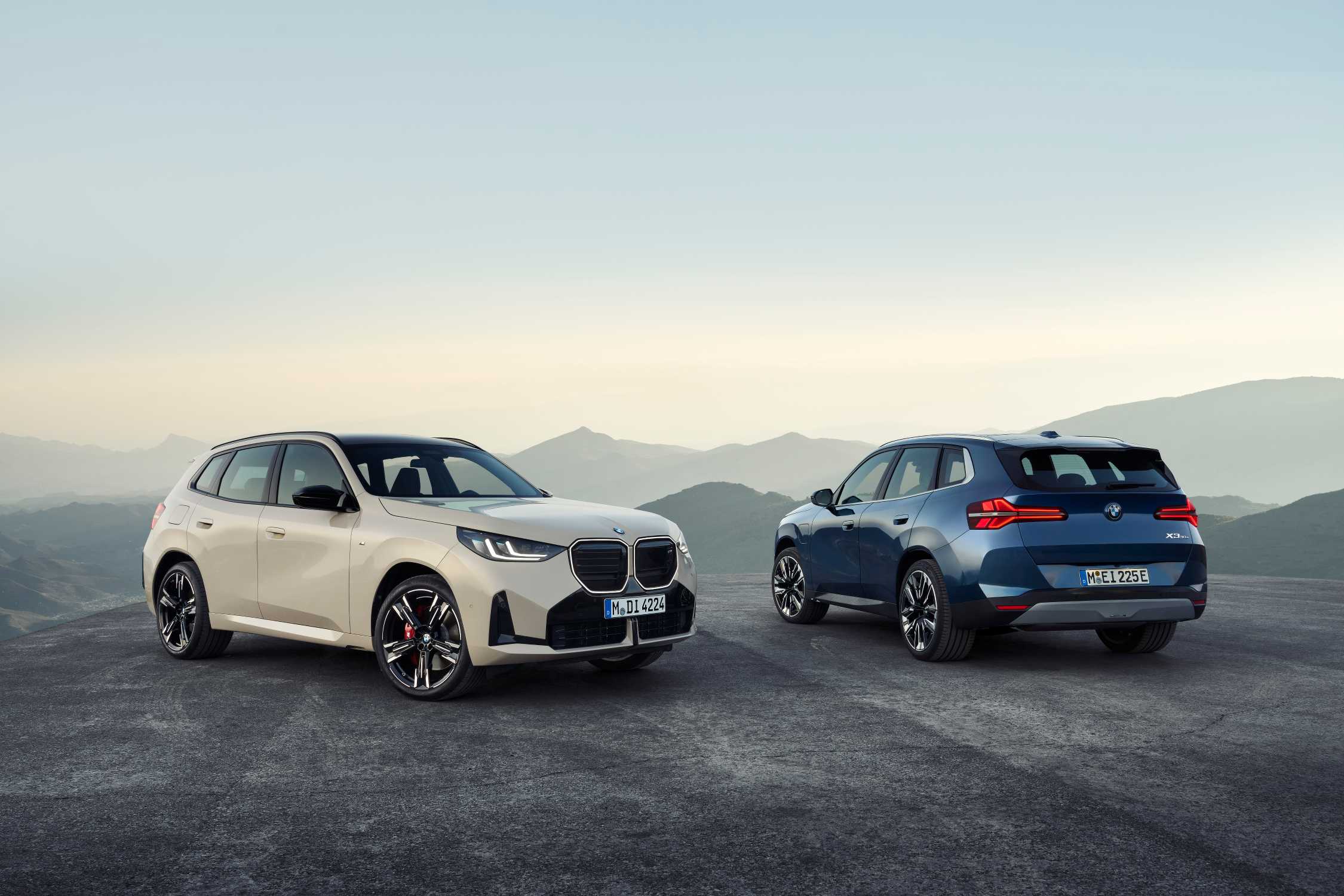
The G45 grows in every exterior dimension. Length increases by 53 mm over the G01, width by 7 mm, and the wheelbase extends by 22 mm. The design language adopts the flatter, more stretched surfacing of the current 3 Series and 5 Series, which means the flanks have fewer character lines and rely more on shadow gradients to define the body. The kidney grille is wider and more horizontal than the G01's treatment, and the rear light clusters are thinner and wider, giving the tail a more grounded visual profile.
The result is a car that looks larger than it is from certain angles — which, in the competitive premium SUV segment, is a useful quality to possess.
48V Mild Hybrid: Standard Across Every Petrol Variant
BMW's decision to make 48-volt mild hybrid technology standard across the entire G45 petrol range is the most significant technical statement the car makes. The system adds a belt-integrated starter-generator producing up to 18 hp and 200 Nm of assistance, enabling extended coasting on overrun, smoother stop-start execution, and measurable fuel consumption reductions in real-world mixed driving. In the 30i and 20i variants, the mild hybrid contribution is particularly noticeable in urban traffic, where the combustion engine restarts instantly and without the vibration that characterised earlier stop-start calibrations.
The xDrive 30i produces 258 hp from its turbocharged 2.0-litre four-cylinder, the xDrive 20d 197 hp from the same-displacement diesel, and — at the top of the initial range — the M50 xDrive uses a 3.0-litre straight-six producing 393 hp. All variants use the eight-speed Steptronic automatic as standard.
Interior: Curved Display and a Cabin That Finally Feels Premium at Its Price Point
The G45 interior is the area where the redesign's ambition is most visible. The dashboard adopts the Curved Display architecture from the 5 Series — a 12.3-inch instrument cluster and 14.9-inch central screen sharing a single glass panel — running iDrive 8 with Over-the-Air update capability. The physical climate controls survive as a dedicated panel below the infotainment screen, which is the right decision in a car that people use for daily commuting rather than extended track sessions.
Rear seat legroom gains from the extended wheelbase are meaningful for adult passengers, and the boot grows by 30 litres to 570 litres — enough that the X3 can make a genuine argument against the slightly larger Audi Q5's practical case.
Dynamics: Rear-Wheel Steering on the Agenda
The M50 variant gains rear-wheel steering as standard — a system that turns the rear wheels up to 2.5 degrees opposite to the fronts at low speeds (reducing effective turning radius by 0.3 metres) and in phase with the fronts at higher speeds (improving stability). For the 30i and 20d variants, rear-wheel steering is available as an option, which brings the G45 inline with competitors where this technology has become an expected feature at the premium end of the class.
On the road, the G45 confirms that BMW's suspension calibration on CLAR-based platforms remains one of the better benchmarks in the segment. Body control is tighter than the G01 allowed, and the steering — while not as communicative as the 3 Series — is precise enough to build confidence in tight corners without requiring the driver to account for understeer during moderate-pace driving.
Why the X3 G45 Matters Beyond Its Segment
The G45 X3 is a high-volume car that BMW has designed with the engineering rigor it usually applies to its driver-focused products. Standard 48V hybridisation, a genuinely improved interior, and a chassis that is better equipped to maintain the brand's dynamic reputation make it a stronger argument than the G01 ever managed. In a segment increasingly dominated by electrified competitors, the G45 makes the case that the efficient, well-resolved combustion platform still has a compelling chapter left to write.