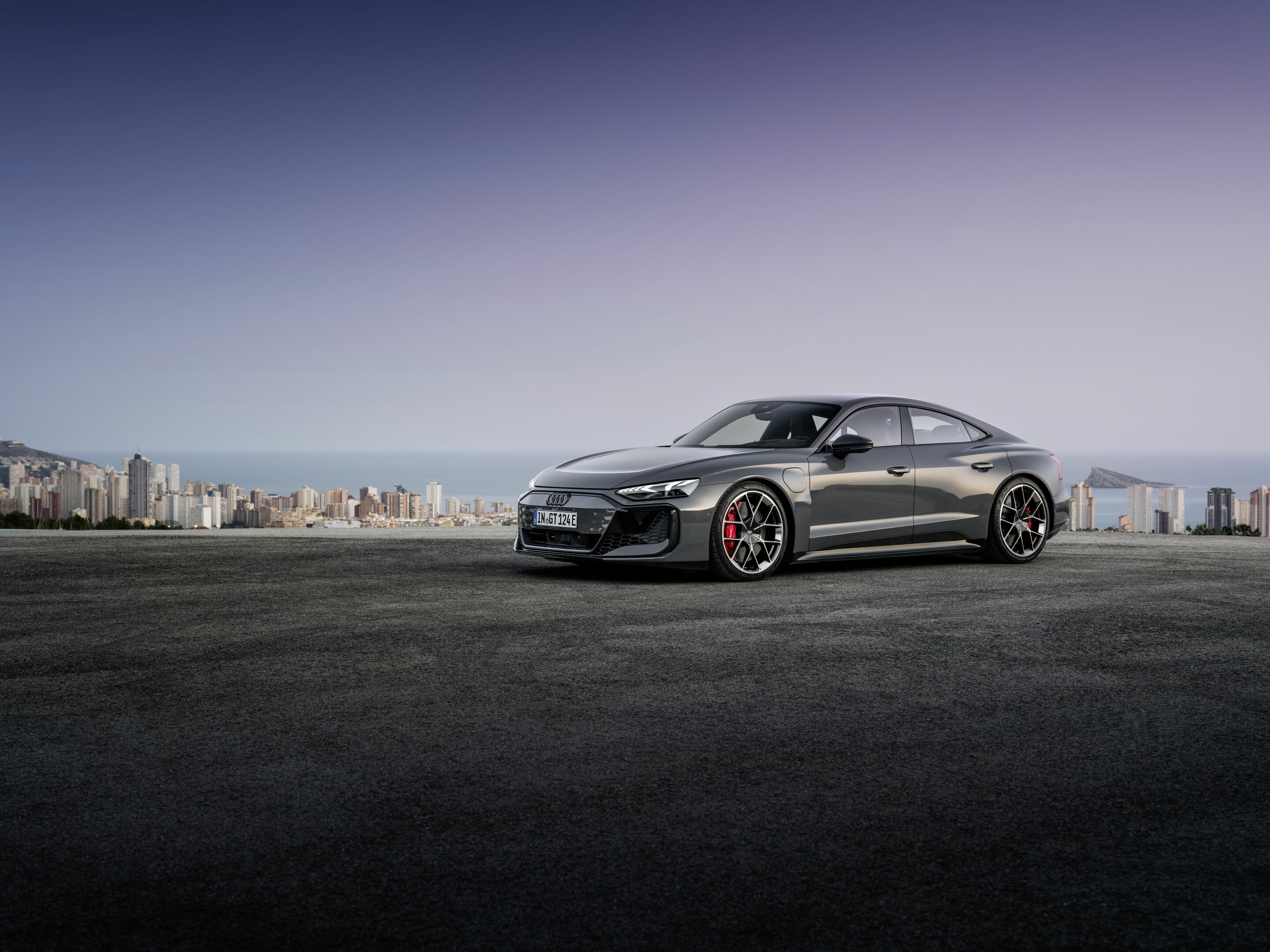
When the original Audi e-tron GT launched in 2021, it was widely recognized as the most driver-focused electric sports car available at the time — more resolved than the Porsche Taycan that shared its platform, with a visual character that was distinctly its own. The Performance variant of 2024 takes that foundation and adds meaningful power, faster charging, and suspension revisions that sharpen the car's responses without disrupting the balance that made the original worthwhile.
912 Horsepower and What It Means
The boost function in the RS e-tron GT Performance delivers 912 horsepower for up to 10 seconds per activation. In normal driving, the car operates at 670 horsepower. The distinction matters: 912 horsepower is available for overtaking, track use, and launch control starts. It is not a number that demands constant attention. The car is not exhausting to drive quickly. It is composed, which is a more useful quality than raw aggression over any distance longer than a quarter mile.
The 105-kilowatt-hour battery supports 320-kilowatt DC fast charging — a genuine engineering achievement. At a compatible station, the car can recover from 10 to 80 percent in under 18 minutes. On longer journeys this changes the practical calculus of electric vehicle ownership substantially. A 20-minute stop every 250 miles is inconvenient. It is not prohibitive.
The Platform Advantage
The J1 platform shared with the Porsche Taycan uses an 800-volt electrical architecture, which is why the charging speeds are possible. The low-mounted battery keeps the center of gravity near the floor, and the air suspension with adaptive dampers manages body motions with the kind of fluency that the best gasoline-powered sedans have spent decades perfecting. Road feel through the steering is not as rich as a direct hydraulic rack, but the weight and response are well-judged for the car's character.
The Design Holds Up
Three years after launch, the e-tron GT's exterior design still reads as clean and intentional rather than dated. The fastback roofline, the muscular rear haunches, the narrow LED lighting signatures — these were the product of a design process that prioritized longevity over novelty. It remains one of the most coherent electric vehicle designs produced by any German manufacturer.
At $175,000 for the Performance variant, the RS e-tron GT competes directly with the Porsche Taycan Turbo S and, by implication, with the Tesla Model S Plaid. Against all three, the Audi's case rests on the quality of its execution and the maturity of its overall presentation. It wins that comparison.